Bedding · Mattress guide
Inside the Vispring Elite: Materials, Support, and Fit
A mattress is a quiet piece of engineering. Its layers, springs, cover, and relationship to the bed beneath it shape a night’s rest in ways that can be difficult to judge from a showroom glance. The Vispring Elite invites a closer look—not only at what a mattress is made of, but at how its construction may suit a particular sleeper, room, and set of expectations.
Published October 17, 2026
There is a particular confidence to a well-made bed. It does not announce itself; it simply receives the body, night after night, without demanding much attention. Yet choosing one can involve a surprising amount of attention: to firmness, support, materials, dimensions, the base below, and the habits of the person who will sleep on it. A model name, however distinguished, cannot answer all those questions on its own.
The Vispring Elite is best considered as a specific mattress to investigate rather than as a promise of universal comfort. Product specifications and configurations can vary by market, size, and date, so the sensible first step is to confirm the current details with the manufacturer or an authorized retailer. From there, a shopper can assess how the mattress’s stated construction relates to their preferences and circumstances. The object is not to find the mattress with the grandest vocabulary. It is to find a coherent fit between materials, support, and the way one actually sleeps.
This guide offers a framework for that assessment. It explains which construction details are worth examining, how to think about support and firmness, what sleeping position can—and cannot—tell you, and why compatibility with a bed base deserves more than a glance at the dimensions.
Start with the specification, not the legend
Premium mattresses often arrive with language that suggests craft, tradition, and permanence. Such language may describe genuine attributes, but it is not a substitute for a materials list. Before comparing the Vispring Elite with another mattress, find the current specification for the exact model and size under consideration. Look for the named materials, the arrangement of the layers, the spring or support system, the cover construction, and any available comfort options.
Be exact about the model name. A product family can include several mattresses whose interiors differ substantially, while a retailer may describe a particular configuration in shorthand. Even a small difference in a layer, spring unit, or upholstery package can change the feel. If the listing is unclear, ask for written confirmation rather than relying on a broad brand description or a specification copied from another model.
It can help to separate claims into three categories:
- Verifiable construction: named components, layer thicknesses, spring configuration, cover materials, and stated manufacturing details.
- Performance language: descriptions such as “supportive,” “responsive,” or “pressure relieving,” which should be tested against personal experience.
- Care and compatibility: turning or rotation instructions, weight guidance, base requirements, and warranty conditions.
This distinction keeps evaluation grounded. A natural or luxurious material may be appealing for its feel or provenance, but the word itself cannot establish that the mattress will be comfortable, durable, or appropriate for a particular body. Likewise, an elaborate construction is not automatically better for every sleeper. What matters is how the complete system behaves under load and whether that behavior suits the person using it.
Materials: what they can tell you
Materials influence a mattress in several overlapping ways. They affect the first impression when lying down, how readily the surface yields, how the mattress responds as weight shifts, and how heat and moisture move through the sleep surface. A label can identify ingredients; it cannot, on its own, tell you precisely how those ingredients will feel in combination.
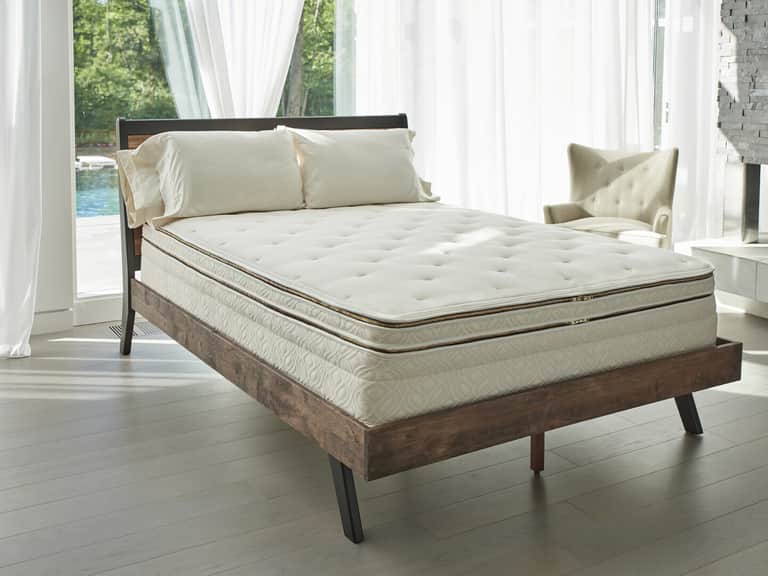
When reading the Vispring Elite’s current material specification, consider each layer as part of a sequence. A comfort layer close to the surface may determine the initial sensation of softness or resistance. Deeper layers can contribute to the mattress’s overall support and stability. The cover and upholstery may influence the surface feel, but their effect depends on what lies beneath. A mattress is not a collection of independent features; it is an arrangement whose parts work together.
Ask whether materials are described clearly enough to compare. “Natural fibers,” for instance, is less informative than a list identifying the fibers and where they appear. “Pocket springs” describes a type of support construction, but shoppers may also need to know the configuration offered in the model they are considering. When details are not published, ask the retailer what can be confirmed and whether the answer applies to the exact size and version on offer.
Material preferences can be practical as well as aesthetic. Some shoppers prioritize a particular tactile feel, some want to understand the contents of the bed, and others are most concerned with maintenance, temperature, or durability. These are legitimate considerations, but they should be assessed individually. A material’s reputation does not guarantee a specific sleep temperature, and a fiber described as breathable does not make a whole mattress immune to warmth. Sheets, room conditions, a protector, and personal physiology all contribute to the experience.
It is also useful to separate material content from environmental or health claims. If a specification includes a certification or a claim about chemical content, check what the claim covers, who issued it, and whether it applies to the complete mattress or only to a component. Clear, narrow claims are easier to evaluate than sweeping language.
Support is not the same as firmness
People often use “firmness” and “support” as if they were interchangeable. They are related, but they answer different questions. Firmness is the subjective impression of how hard or soft the surface feels. Support concerns how the mattress responds to a sleeper’s weight and helps maintain a comfortable, stable position. A mattress can feel plush at the surface and still provide a substantial underlying structure; it can also feel firm without being a good match for someone’s body.
That difference explains why a brief test can be misleading. A surface may seem inviting for a minute and become uncomfortable after a longer interval, or an unfamiliar mattress may initially feel firmer than expected before the body has settled into a natural position. Try to test the mattress in a way that resembles ordinary use: in your usual sleep position, for long enough to notice pressure, tension, or a tendency to shift.
Pay attention to the places where your body meets the mattress. Does the surface feel comfortable around the shoulders and hips? Does your lower back feel strained or unsupported? Can you change position without excessive effort? Do you feel an urge to brace, curl, or repeatedly rearrange yourself? These observations are more useful than a simple verdict that the bed is “soft” or “hard.”
Neither a particular spring count nor a firmness label can settle the question by itself. Ratings are not perfectly standardized across brands, and personal perception varies. The Vispring Elite’s support should therefore be assessed through its verified construction, the exact configuration available to you, and—where possible—a meaningful in-person trial or a clearly stated home trial policy.
Let sleeping position guide the test
Sleeping position offers a useful starting point, not a prescription. Side sleepers often pay close attention to pressure at the shoulder and hip, since those areas meet the mattress more directly. A surface that feels too resistant may create discomfort; one that yields too readily may leave the sleeper feeling poorly held. The right balance depends on body shape, weight distribution, and personal preference.
Back sleepers may focus on whether the mattress feels even beneath the torso and pelvis. A comfortable bed should not prompt a persistent sense of sagging or a forced arch. Stomach sleepers may be particularly alert to whether the middle of the body seems to sink too far, though the answer will again depend on the individual and the mattress’s full construction.
Combination sleepers—those who regularly move between positions—can test how easily the surface permits movement. A deeply yielding feel may be pleasant in one position but less convenient when turning. Conversely, a highly buoyant or firm impression may make movement easy while feeling less forgiving at contact points. There is no need to elevate one quality as the winner. The question is whether the balance works for your ordinary night.
For two people sharing a bed, the assessment grows more complicated. Partners may differ in preferred firmness, weight, sleep position, or sensitivity to movement. Test together if possible, and note whether one person’s movements disturb the other. Ask whether the model is offered in configurations that accommodate different comfort preferences, and confirm the available options for the specific size. Do not assume that a feature offered elsewhere in a brand’s range is included in the Elite.
Fit means more than mattress dimensions
A mattress can be the right length and width and still be wrong for its setting. “Fit” includes the bed frame, foundation or platform, room access, finished bed height, and the practicalities of moving and caring for the mattress. These details are not glamorous, but they have a habit of becoming important after delivery.
First, confirm the mattress dimensions rather than relying only on a familiar size name. Size conventions can differ across countries and manufacturers. Measure the interior of the frame and check its support requirements. If the mattress is designed for use with a particular kind of base, follow that guidance; a base that is unsuitable may affect feel, performance, or warranty coverage.
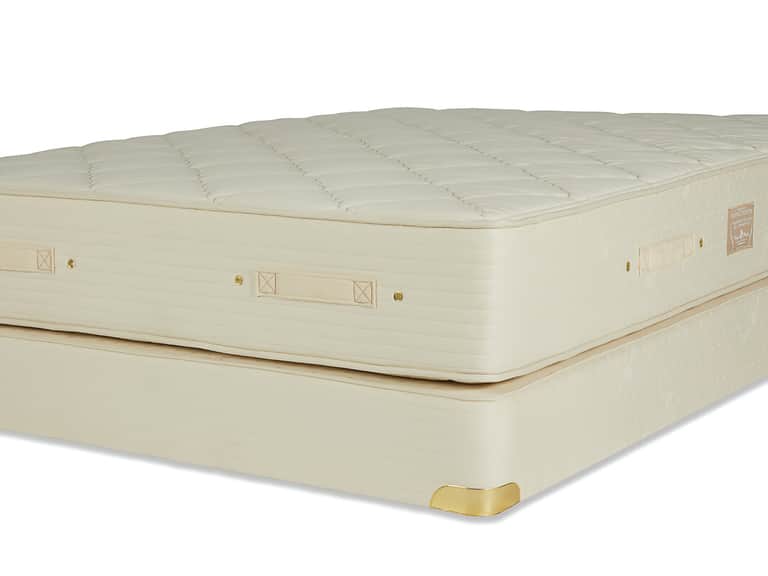
For slatted frames, ask about spacing and support across the full mattress. For an adjustable base, verify explicitly that the exact Vispring Elite configuration is compatible. Never infer adjustable-base suitability from another mattress in the range. If using a separate foundation, confirm whether it is required, optional, or simply recommended, and whether its dimensions align with the mattress.
Height matters, too. The mattress’s profile combines with the base and frame to determine how high the finished bed sits. That can affect getting in and out, the appearance of the room, and the depth of fitted sheets. Check pocket depth on the sheets you own, especially if the mattress is paired with a protector or topper. Layers added later can alter the fit of bedding and may change the way the mattress feels.
Finally, measure the route into the room. Stair turns, narrow hallways, elevators, and doorways can complicate delivery of a large mattress. Ask the retailer about delivery conditions, packaging, setup, removal of an old mattress, and what happens if access proves difficult. These questions belong to the purchase decision, not to an afterthought.
A trial is a small experiment
If a showroom test is available, approach it as a comparison rather than a performance. Spend several minutes in each position you commonly use. Bring the pillow you normally sleep with, if the retailer permits it, since pillow height can influence the apparent comfort of a mattress. If you are comparing models, return to the first one after testing the second; memory for subtle sensations is less reliable than we like to think.
Ask about the return or exchange policy before purchase. A home trial can reveal things a showroom cannot: how the bed feels after a full night, whether a partner’s movement is noticeable, whether the room temperature changes your impression, and whether the mattress works with your existing base and bedding. Read the conditions closely. A trial may involve a minimum period, fees, collection rules, or requirements for using a protector.
During a trial, keep the variables steady when possible. Use the same pillow and bedding, and give the mattress a fair chance under normal conditions. Take brief notes after waking: position, pressure points, ease of movement, temperature, and whether you felt rested. A few observations across several nights can be more informative than an immediate, dramatic reaction. Follow the manufacturer’s instructions on setup and care throughout.
Do not treat discomfort as a test you must pass. If persistent pain, numbness, or other concerning symptoms occur, stop using the mattress and seek appropriate professional advice. A bedding purchase is not a diagnosis or a substitute for medical care. The goal is a comfortable sleep surface, not endurance.
Care, longevity, and the fine print
Before buying, establish what ordinary care entails. Some mattresses should be rotated periodically; others may have specific instructions about turning, cleaning, or using a protector. Do not assume that a mattress is flippable, or that turning it is permitted, simply because another model can be handled that way. Follow the care guide for the exact product.
Ask what the warranty covers and what it does not. Warranty language may distinguish manufacturing defects from changes associated with normal use, and it may include requirements concerning the base, frame, or care. A warranty is not a forecast of how long the mattress will feel comfortable to you. It is a document with defined terms, and it is worth reading before committing to a substantial purchase.
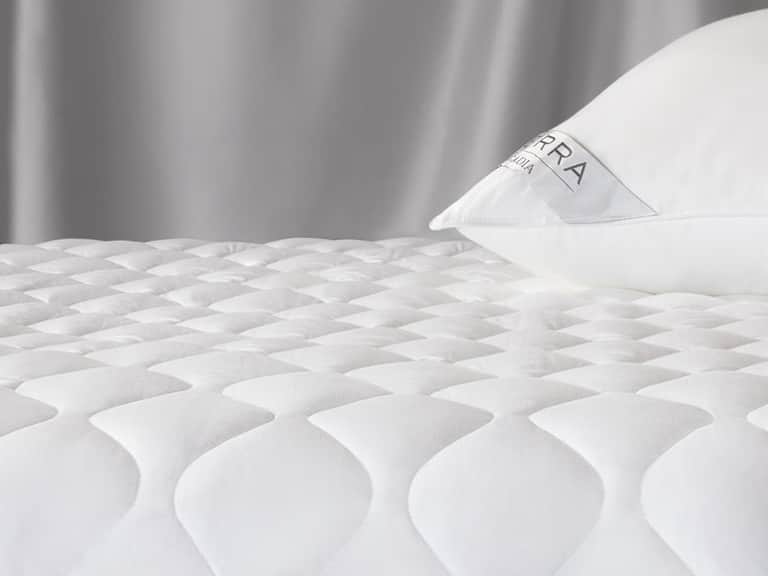
Consider the practical work of ownership: the mattress’s weight, whether one person can rotate it safely, what kind of protector is recommended, and how the cover should be cleaned. A protector can help guard against spills and everyday wear, but it may also alter the surface feel. If using one, choose a product compatible with the care guidance and test the combined setup rather than assuming the layers will be imperceptible.
Durability is not a single material claim. It depends on construction, use, care, the supporting base, and the conditions in the room. Ask the seller what maintenance is recommended and what signs of wear are considered normal. A candid explanation of limitations is more useful than an unqualified promise of permanence.
Questions to bring to the retailer
A little preparation can turn a showroom conversation from a recital of adjectives into a useful exchange. Keep the questions specific, and ask for answers that apply to the precise model and size you plan to order.
- What are the current materials and layer arrangement in this exact Vispring Elite configuration?
- What support system is used, and are there different firmness or comfort options?
- Which bases are approved, and is the mattress compatible with my existing frame or adjustable base?
- What are the mattress’s exact dimensions, profile, and weight?
- What care is required, including rotation or turning, and what should not be done?
- What is the trial or exchange policy, and are there fees or minimum-use conditions?
- What does the warranty cover, and what base or care requirements apply?
- Can I receive the current specification and policy details in writing?
If the answers differ between a product page, showroom, and sales representative, pause and resolve the discrepancy. Specifications change; older descriptions can linger online. Written confirmation helps ensure that the mattress delivered is the one you evaluated.
A sensible way to decide
The Vispring Elite may attract shoppers interested in a carefully constructed mattress, but the name alone cannot establish whether it is the right choice. Begin with the exact materials and support details. Compare them with your own priorities: the firmness you enjoy, the positions you sleep in, how readily you move, your temperature preferences, and whether another person shares the bed.
Then consider the bed as a complete arrangement. Confirm the base, dimensions, finished height, delivery route, trial policy, care instructions, and warranty conditions. If possible, test the mattress in person and use a home trial thoughtfully. A bed should be judged not just by how it feels beneath a hand in a showroom, but by how it receives a body through ordinary nights.
There is no universal score for comfort. One sleeper’s reassuring firmness may be another’s persistent pressure; a softly yielding surface may feel restful to one person and cumbersome to another. The most useful review is therefore partly technical and partly personal. Materials and construction provide the framework. Your body, your room, and your daily habits complete the evaluation.
In the end, a good purchase is less like discovering a secret and more like checking a set of details until they agree. The specification makes sense. The support feels right. The mattress fits the base and the room. The terms are clear. And, after the ceremony of choosing has passed, the bed becomes what it ought to be: an unobtrusive place to rest.