Bedding · Practical guide
Choosing Sheets for a Natural Latex Mattress: Fit, Fabric, and Breathability
The right sheets should settle over a latex mattress without a nightly tug-of-war, feel pleasant against the skin, and let warmth escape rather than gather. A little measuring—and a closer look at fabric, weave, and care—can make the difference between bedding that works with your mattress and bedding that seems determined to leave it.
Published November 3, 2026
A fitted sheet is a modest piece of engineering. It has to stretch over a rectangle, grip its corners, and remain in place while a person changes position in the dark. This is not, on paper, a heroic assignment. Yet few household inconveniences are so reliably capable of announcing themselves at three in the morning as a sheet that has come loose beneath one’s feet.
With a natural latex mattress, fit deserves particular attention. Latex mattresses vary in height and construction, and their springy surface can make a poorly sized sheet feel less secure. A mattress protector, quilted pad, or topper adds another layer to the calculation. Meanwhile, the fabric touching the sleeper influences softness, airflow, and how much work laundry day requires. The aim is not to discover a universally perfect sheet—bedding is too personal for that—but to find one that fits the actual bed and suits the conditions in which it will be used.
Begin with the bed you have
Mattress labels and product pages give a useful starting point, but they do not always describe the final height of a made bed. A natural latex mattress may be sold at one profile and then gain a mattress pad or topper. Those additions can change the depth a fitted sheet must cover, sometimes enough to turn a dependable fit into a sheet that creeps upward at the corners.
Measure the mattress itself rather than relying solely on a remembered specification. Take the measurement from the bottom edge to the top of the mattress, following the side rather than pressing a tape measure into the surface. If a topper or pad will stay on the bed, include it. The relevant number is the height of the full stack that the fitted sheet must wrap around.
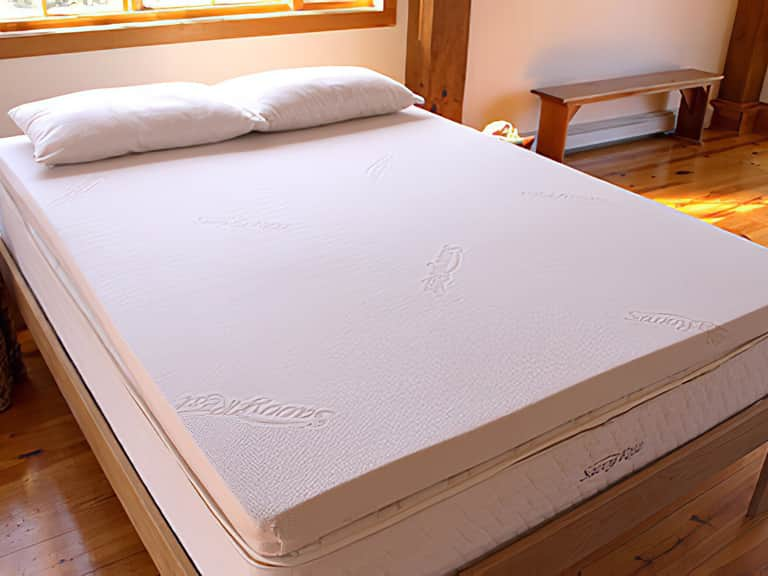
For example, a latex mattress topped with a three-inch layer will require more pocket depth than the mattress alone. A product such as the Savvy Rest Vitality Latex Mattress Topper is a three-inch latex layer, so it should be included in the measurement if it is part of the bed’s regular setup. That is not a reason to buy a larger sheet automatically; it is a reason to measure the assembled bed before choosing one.
There is a practical distinction between the depth of the mattress and the pocket depth advertised for a fitted sheet. The pocket depth describes how much of the mattress side the sheet is designed to cover. Some sheets also include elastic around the full perimeter, while others use elastic only at the corners. Construction varies, so product details matter, especially when the bed is near the upper limit of a sheet’s stated depth range.
How to measure for pocket depth
Place the mattress, protector, and any regularly used topper or pad on the bed. Measure their combined height. Then consider whether you want a little fabric to tuck beneath the mattress. A fitted sheet needs enough depth to cover the top and sides and to hold beneath the lower edge. If the advertised pocket depth exactly matches the stack height, there may be little spare fabric to anchor it.
Manufacturers may describe a sheet as suitable for mattresses up to a particular depth. Treat that as a useful limit, not a promise that every bed at that height will fit identically. Mattress corners, quilting, elastic placement, and the thickness of a protector can all affect how a sheet sits. When your measurement falls near the stated maximum, a deeper-pocket option may provide a more secure fit.
- Measure the full sleep surface: include the mattress protector and any pad or topper that will remain beneath the sheet.
- Check the sheet’s stated maximum depth: compare it with your total measurement, not just the mattress specification.
- Allow for anchoring: a small margin can help the sheet tuck beneath the mattress rather than merely cover its sides.
- Confirm mattress size: Twin, Twin XL, Queen, and King are not interchangeable, and some beds have less common dimensions.
Once the sheet is on the bed, check the corners after making it and again after a night or two. If the elastic repeatedly rides up, the fit may be too shallow or the sheet may be the wrong size. If the surface is loose and baggy, it may be too deep, too large, or cut for a mattress with different dimensions. A well-fitted sheet should lie smoothly without being stretched so taut that it strains at the seams.
What latex changes—and what it doesn’t
Natural latex is valued for its responsive, buoyant feel. Unlike a rigid platform, a mattress surface gives under pressure and returns toward its original shape. Sheets do not need a special “latex” designation to work with it. They do need to fit the mattress dimensions and allow the sleeper to move without the fabric pulling loose or bunching into ridges.
The mattress’s construction may also influence how warm or cool the bed feels, but no sheet can be expected to erase the effects of a hot room, heavy comforter, or individual differences in temperature. Bedding works as a system: mattress, protector, sheet, blankets, room climate, and the person sleeping beneath them. A breathable fabric can help manage the feel of the surface, but “breathable” is not a guarantee of a cooler night in every situation.
There is a small but useful distinction between airflow through a fabric and the impression of coolness when it first touches the skin. A smooth sheet may feel cool at first contact, while a more textured one may feel warm or cozy. Neither sensation alone tells the whole story about ventilation over several hours. Fiber, weave, fabric weight, moisture, and the surrounding bedding all contribute.
Fabric: start with comfort and care
Cotton remains a common choice because it is familiar, available in many weights and finishes, and generally straightforward to wash. Its feel depends on more than the word “cotton” on a label. Fiber quality, yarn, weave, and finishing all matter. A crisp cotton percale, for instance, feels different from a smoother sateen, even when both are made from cotton.
Linen, made from flax, often has a textured hand and a relaxed appearance. It can appeal to sleepers who like a less polished surface and fabrics that soften with use. It may wrinkle more conspicuously than some alternatives, a fact that is either a drawback or a form of interior-design honesty, depending on one’s relationship with an iron.
Microfiber is typically made from very fine synthetic fibers. It is often lightweight, soft to the touch, and easy to find at a range of prices. Its performance varies by construction and finish; a very light, tightly made fabric may feel different from a heavier one. Shoppers who prioritize natural fibers may prefer another option, while those comparing easy care and cost may find microfiber worth considering.
Other fabrics, including blends, can combine characteristics or alter the way a sheet drapes and wears. Rather than assuming that a fiber name guarantees a particular sleep experience, look for specific information about material composition, fabric weight when provided, washing instructions, and return policies. If possible, feel a swatch or examine a sheet before committing to a full set.
Weave shapes the surface
Weave describes how threads cross one another, and it helps determine the sheet’s texture, drape, and weight. Percale is generally associated with a crisp, matte feel and an airy hand. Sateen tends to feel smoother and may have a subtle sheen. These are broad descriptions, not laws of nature: finishing, yarn quality, and manufacturing choices create meaningful differences between products sold under the same weave name.
For sleepers who prefer a light, crisp sheet, percale may be a sensible place to begin. Those who favor a smoother, more fluid surface may lean toward sateen. Neither weave is automatically superior for a natural latex mattress. The better choice is the one that feels comfortable in your climate and is compatible with the way you wash and dry bedding.
Thread count is often treated as if it were a simple score of quality. In reality, it is one specification among several, and a higher number alone does not guarantee a more breathable or durable sheet. Fiber, yarn, weave, and finishing are all part of the picture. A clear description of materials and construction is more useful than a number presented without context.
Breathability, moisture, and the room itself
People often search for breathable sheets when they sleep warm, live in a humid climate, or want a lighter-feeling bed. Breathability is worth considering, but it is not a single standardized sensation. A fabric’s structure can allow air and moisture to move differently; the sheet’s weight and the layers above it also matter. A dense blanket can overwhelm the advantages of a light sheet, just as a cool room can make a heavier weave feel perfectly comfortable.
Think about the whole arrangement. If the mattress has a thick protector, that layer may influence airflow and surface feel. If the bed is made with several blankets, changing the top layers may have a more noticeable effect than replacing the fitted sheet. A useful approach is to adjust one element at a time, so that the cause of any improvement—or disappointment—is easier to identify.
Washing habits are part of this calculation. Sheets that are easy to launder can be changed regularly, which matters for ordinary hygiene and comfort. Check care labels before purchase: some fabrics tolerate regular machine washing and drying, while others call for gentler treatment or careful attention to temperature. Follow the manufacturer’s instructions, and avoid assuming that all natural fibers or all synthetic blends should be washed alike.
A note on protectors and pads
A mattress protector helps shield the mattress from spills, body oils, and everyday wear. A pad may add cushioning, alter the feel of the surface, or provide another layer between the sleeper and mattress. These are distinct functions, even when products use overlapping language. Either can affect the fit of a fitted sheet, so measure with the layers you actually intend to use.
Thicker quilting can create a more substantial surface and add height. A slim protector may add very little, but it still belongs in the measurement if it remains on the bed. Sheets are often purchased for the mattress as though it were an isolated object, then asked to accommodate a small architectural project built above it. Measuring the complete arrangement prevents that surprise.
A straightforward shopping checklist
Before choosing sheets for a natural latex mattress, gather the details that matter most. The process need not become an investigation into every thread in the textile industry. It is enough to know the bed’s dimensions, its total height, and what kind of surface you like to sleep on.
- Measure mattress length, width, and total height with the protector, pad, or topper in place.
- Compare the measurement with the fitted sheet’s pocket-depth range and leave room for a secure tuck.
- Choose a fabric based on feel, climate, breathability preferences, and care requirements.
- Compare weave descriptions—such as percale or sateen—as clues to texture, not guarantees of performance.
- Read the washing instructions and check whether the sheet’s dimensions match your mattress size.
- Consider trying one set before buying several, particularly if you are unsure about the fabric’s feel.
The quiet test
Good sheets are rarely the most conspicuous part of a bedroom. Their success is measured in the absence of small irritations: no corner peeling away, no seam pulled tight, no surface that feels wrong against the skin. That quiet competence begins with fit and continues with the fabric’s ordinary behavior over weeks of sleeping, washing, and making the bed.
For a natural latex mattress, the essential sequence is simple: measure the complete bed, choose a fitted sheet with sufficient pocket depth, then select a material and weave that suit your preferences. Breathability matters, but it shares the stage with room temperature, mattress layers, blankets, and personal comfort. A sheet cannot solve every sleep problem. It can, however, fit properly, feel good, and stop calling attention to itself—which is a rather satisfying ambition for something whose chief duty is to disappear beneath a person all night.